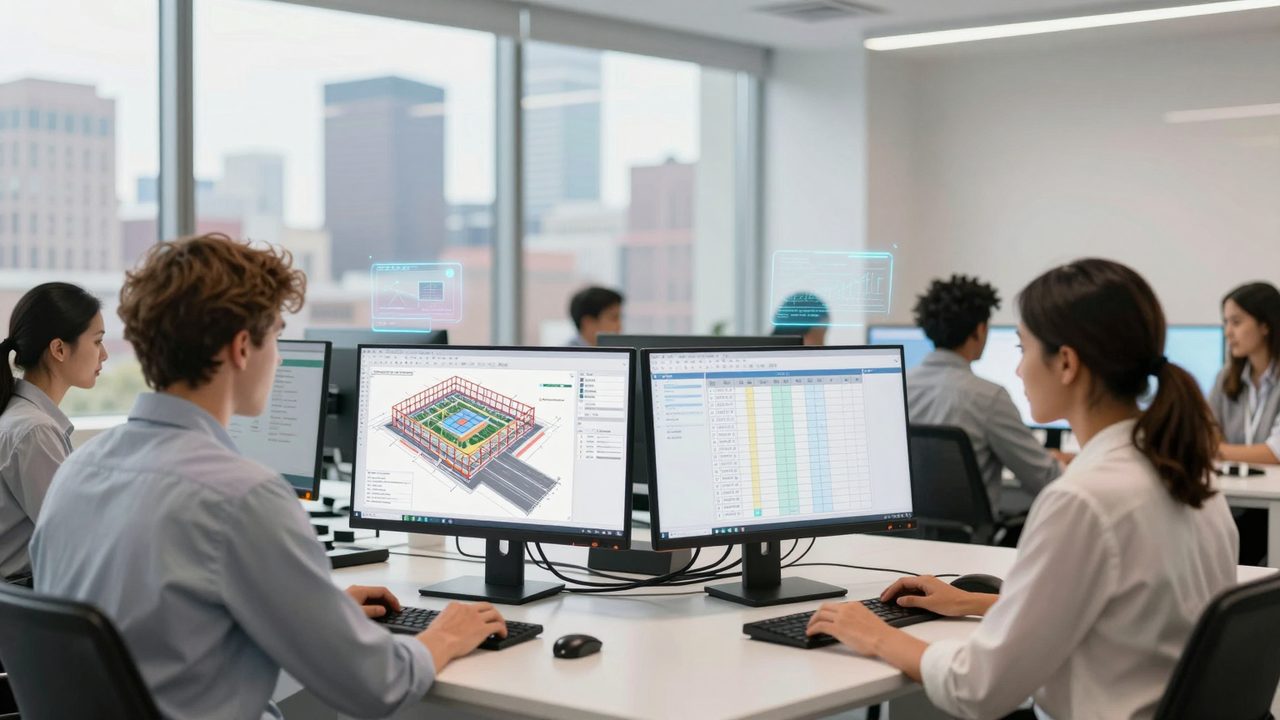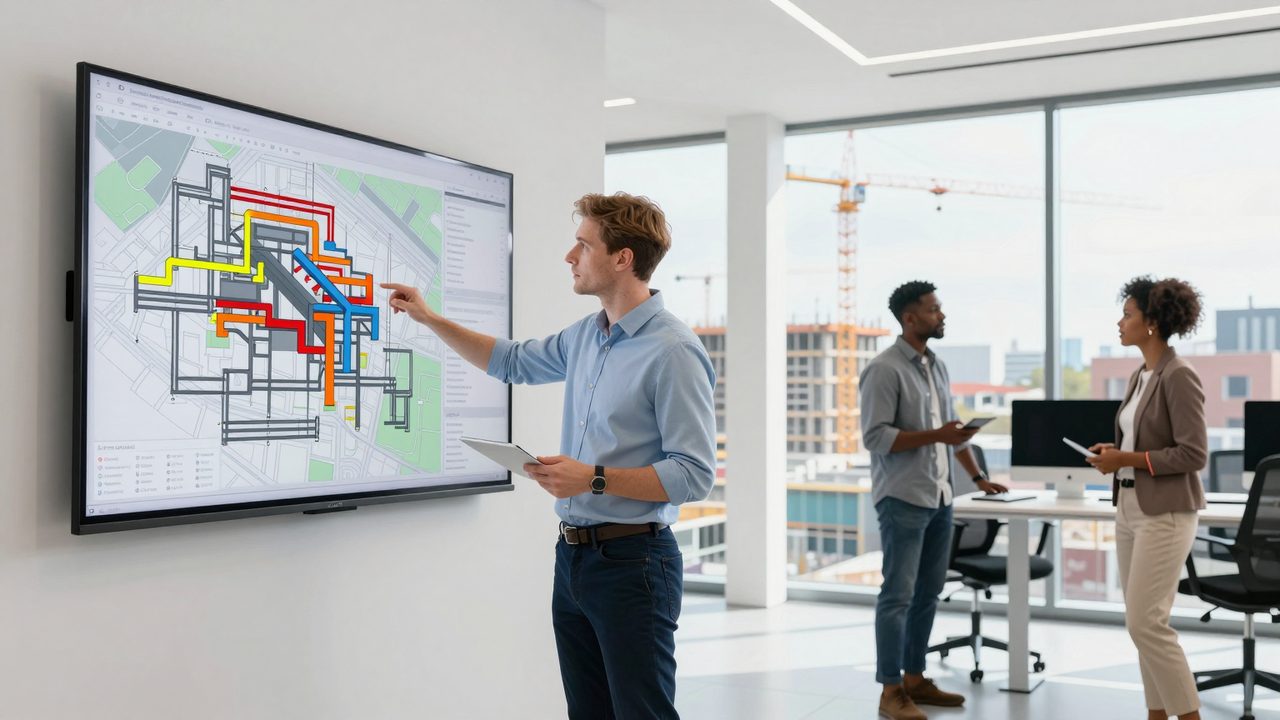
Building Information Modeling has changed how projects are designed and delivered, and it has created new professional roles along the way. One of the most in-demand is the BIM coordinator: the person who makes sure models from different disciplines fit together, information flows correctly and problems are found on screen rather than on site. If you are an architect, engineer, technician or drafter looking for a career direction that combines technical depth with collaboration, BIM coordination is worth a serious look.
What Does a BIM Coordinator Do?
Job titles vary between firms and countries, but the BIM coordinator role typically sits between BIM modelers or technicians and BIM managers or information managers. Typical responsibilities include:
- Model coordination: federating architectural, structural and MEP models and checking alignment, shared coordinates and levels.
- Clash detection: setting up and running clash tests, grouping and prioritizing results, and tracking issues to resolution.
- Coordination meetings: preparing viewpoints, chairing or supporting design coordination meetings and recording decisions.
- Standards compliance: checking that models follow the BIM Execution Plan (BEP), naming conventions and the agreed level of information need.
- Model quality checks: auditing model health, warnings, file sizes, families and data.
- CDE management: managing uploads, statuses and transmittals within the common data environment.
- Support and training: helping project teams solve software problems and follow workflows.
- Construction support: on contractor teams, producing coordinated MEP and structural shop drawings, 4D sequences or quantity take-offs.
The Technical Skills You Need
Authoring software
You need solid working knowledge of at least one major authoring platform, most commonly Autodesk Revit, along with an understanding of how other disciplines model. A structural or MEP coordinator should know how those systems are modeled and what is buildable.
Coordination and review tools
- Autodesk Navisworks Manage for federation, clash detection and 4D simulation.
- Cloud coordination platforms such as Autodesk Construction Cloud.
- Open-standard viewers and checkers that use IFC and BCF.
Information management
Understand the principles of ISO 19650: the roles, the requirements hierarchy (OIR, AIR, PIR, EIR), BEPs, delivery plans and CDE workflows. Many employers now expect coordinators to speak this language.
Automation and data
Visual programming with Dynamo or Grasshopper, and basic Python, can automate repetitive checks and data tasks. Comfort with Excel or Power BI for issue tracking and reporting is a practical advantage.
Construction knowledge
This is the differentiator. Software skills tell you that a duct clashes with a beam. Construction knowledge tells you whether it matters, who should move and what the tolerances and installation sequences allow. Coordinators with site experience or a strong understanding of building systems are especially valuable.
A Typical Week
A coordinator's week often follows the project's coordination cycle. Early in the week, discipline teams upload updated models to the CDE. The coordinator checks them against the BEP, federates them and runs the agreed clash tests. Results are grouped by system and location, then turned into a short list of priority issues with saved viewpoints. Midweek, a coordination meeting assigns each issue to an owner with a due date. Later in the week, the coordinator follows up on open issues, updates the issue log, answers modeling questions and prepares a status report for the project or BIM manager.
The Soft Skills That Matter
- Communication: explaining technical issues clearly to designers, contractors and clients.
- Facilitation: running productive meetings with stakeholders who have competing priorities.
- Attention to detail: spotting the small inconsistency that becomes a costly site problem.
- Prioritization: separating thousands of trivial clashes from the critical few.
- Diplomacy: resolving issues without assigning blame.
Common Routes into the Role
- From BIM modeler or technician: the most common path. Take on coordination tasks, volunteer for clash reviews and learn the information management side.
- From architecture or engineering: graduates and junior professionals with strong Revit skills often move into coordination, bringing design knowledge with them.
- From CAD drafting: experienced drafters can transition by building BIM authoring and coordination skills.
- From site roles: site engineers and MEP installers who learn BIM tools bring rare practical insight.
Building Your Experience and Portfolio
- Master one authoring tool thoroughly, including families, worksharing, shared coordinates and view templates.
- Learn coordination workflows hands-on. Federate sample multidisciplinary models, set up clash rules and produce clash reports.
- Study ISO 19650 and practice writing a BEP section or a delivery plan.
- Build a portfolio of before-and-after coordination examples, clash reports, automation scripts and standards documents. Respect your employer's and clients' confidentiality, and use sample or anonymized projects.
- Seek coordination responsibility at work, even on small projects.
- Earn verifiable training credentials that show structured learning to employers.
- Join professional communities, local BIM user groups and industry events to keep learning.
Where the Role Can Lead
BIM coordination opens several career paths:
- BIM manager: responsible for BIM strategy, standards and teams within a firm or on major projects.
- Information manager: the ISO 19650 role focused on information requirements, CDE governance and assurance.
- Digital construction or VDC manager: leading 4D/5D, reality capture and construction technology on contractor teams.
- Digital twin and asset information specialist: connecting project data to operations and facility management.
- Computational design or automation specialist: building tools and workflows that scale.
Tips for Interviews
- Be ready to walk through a clash detection workflow from model setup to issue closure.
- Explain how you would prioritize and communicate clash results.
- Show familiarity with BEPs, naming conventions and CDE states.
- Describe a coordination problem you solved and its effect on the project.
To build core coordination skills, including model federation, clash testing, issue management and 4D simulation, explore the IACEA course BIM Coordination and Clash Detection with Navisworks. Pair it with BIM Information Management to ISO 19650 for the process side.